
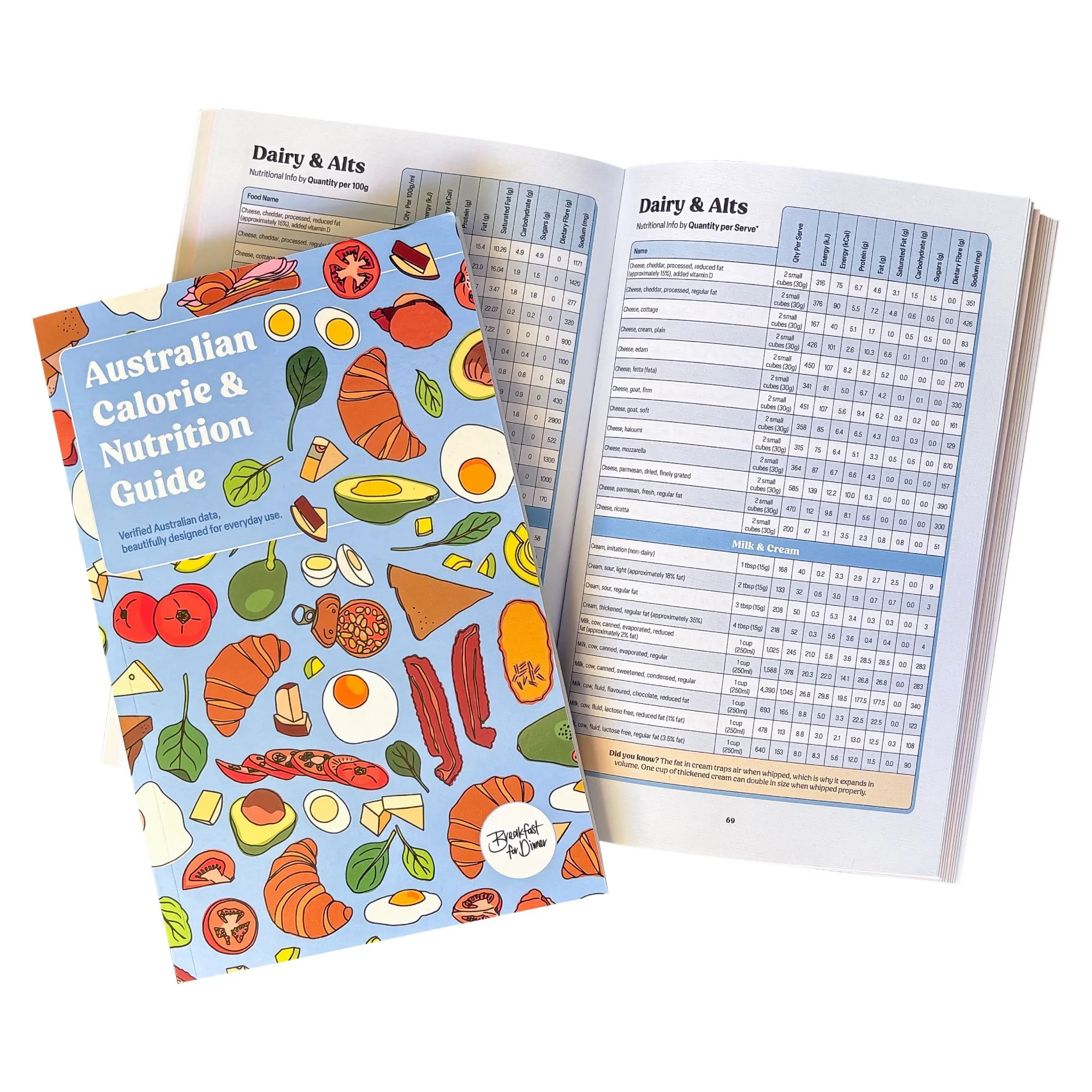
BREAKFAST FOR DINNER NUTRITION SERIESAustralian Calorie & Nutrition Guide
Real Australian food data, in a book you’ll actually want to open.
Most calorie apps are full of American products, user-entered guesses and numbers that don’t match what’s on the shelf. This guide is the opposite. Every figure comes from Food Standards Australia New Zealand (FSANZ), laid out the way you shop, by supermarket aisle, so you can look something up in seconds and get on with your day.




Take a look inside
Laid out like the supermarket
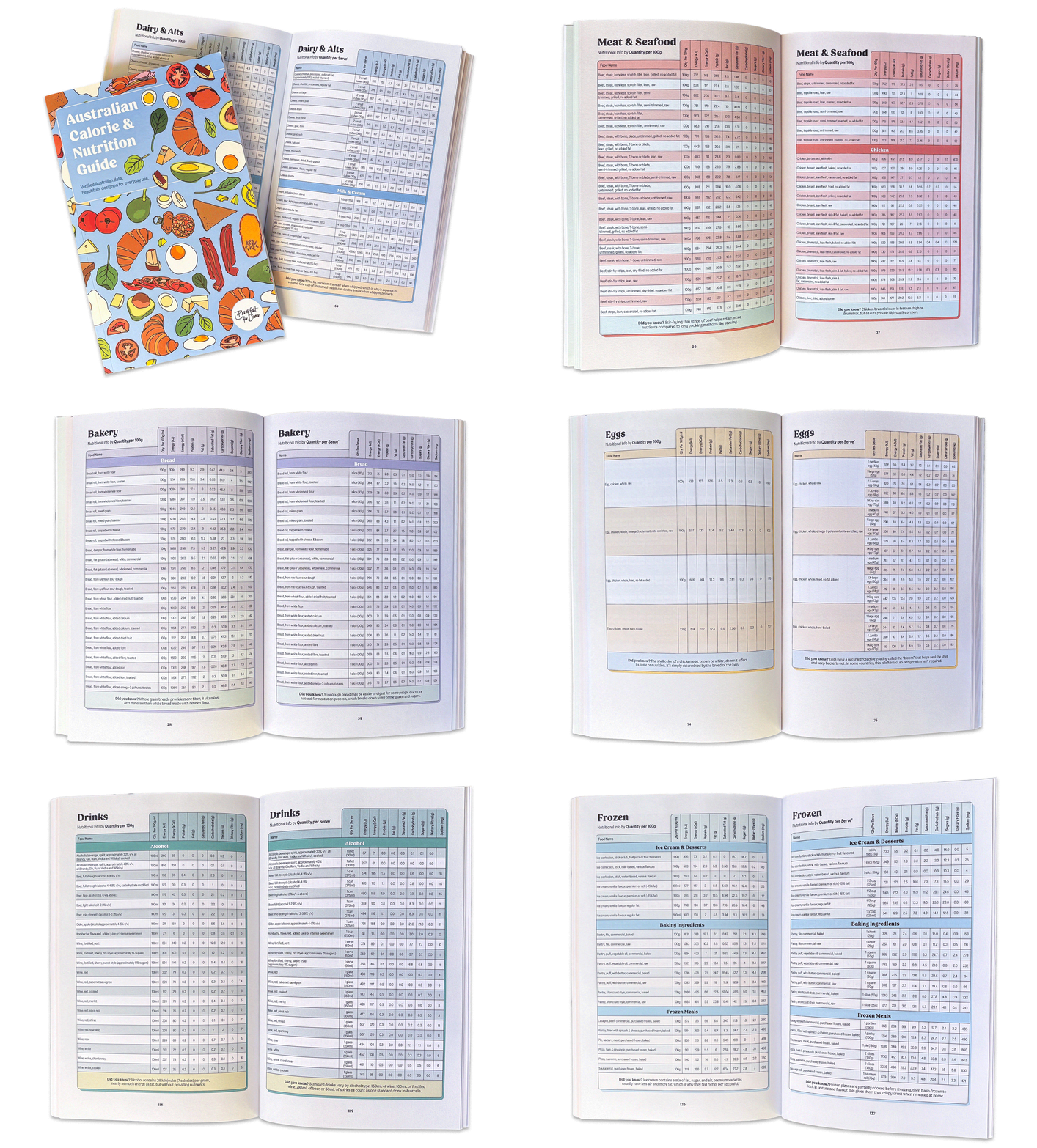
Nine colour-coded sections, from Fruit & Veg to Meals & Takeaway, split into more than 60 categories. Look up one food, or flip through a whole aisle and get ideas you hadn't thought of.

Two ways to read every food
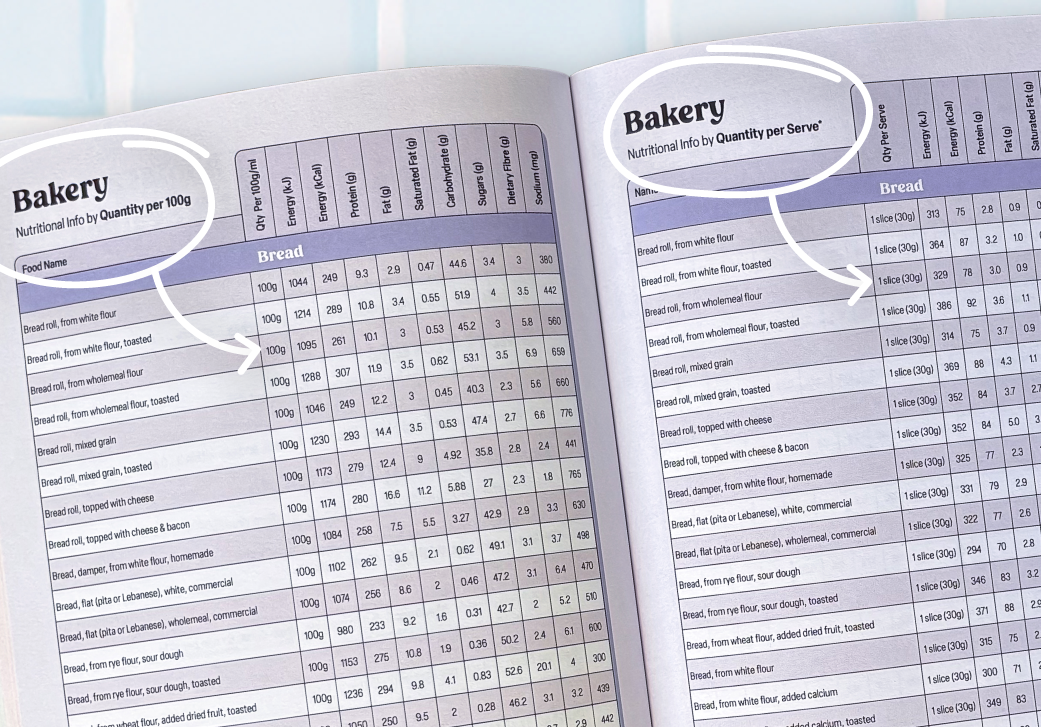
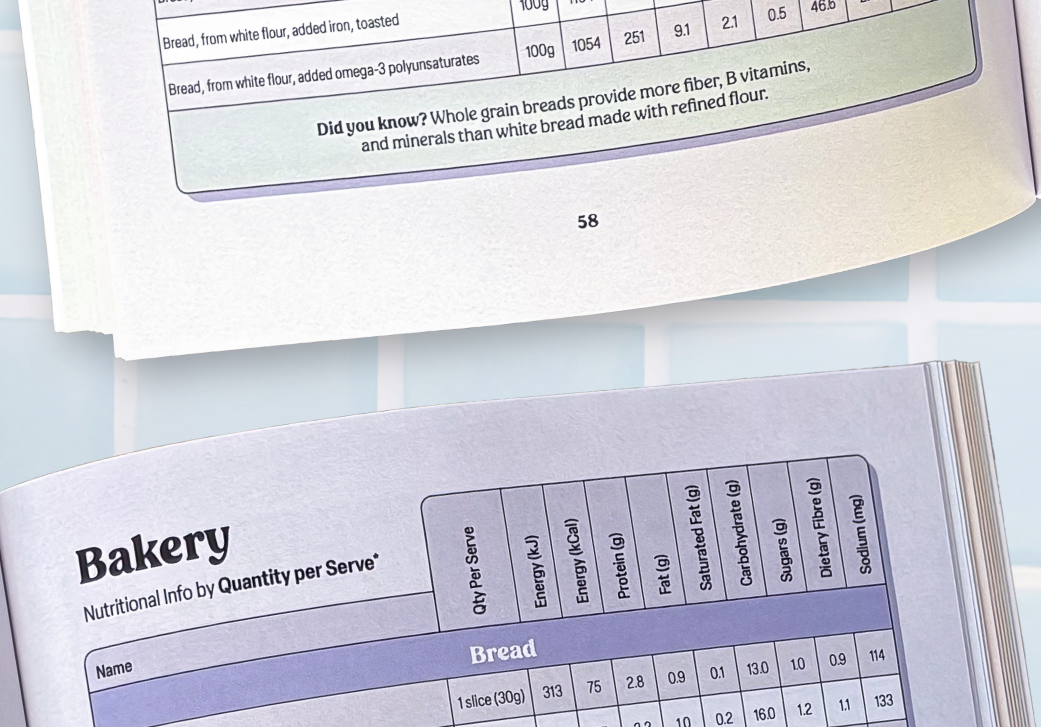
The left page shows values per 100g, handy if you're weighing ingredients. The right page shows a typical serve, like one medium apple or half a cup of blueberries. Rows line up across the spread, so you can compare without flipping back and forth.
The full picture, not just calories
Energy in kJ and kcal, protein, fat, saturated fat, carbs, sugars, fibre and sodium for every food. Plus a "Did you know?" fact on each page, because food is more interesting than numbers alone.
Good questions
-
Nutrition data for thousands of Australian foods across nine sections: Fruit & Veg, Meat & Seafood, Bakery, Dairy & Alts, Eggs, Pantry, Drinks, Frozen, and Meals & Takeaway. It covers the everyday staples as well as the things apps often get wrong, like protein powder, lollies, alcohol, international foods and takeaway. Each food lists energy (kJ and kcal), protein, fat, saturated fat, carbohydrate, sugars, dietary fibre and sodium.
-
Food Standards Australia New Zealand (FSANZ), formerly known as NUTTAB. It’s the official source of Australian food composition data, so there are no user-submitted entries and no American products standing in for local ones.
-
Because people measure food in two ways. If you weigh things, the per 100g page is your friend. If you’d rather think in serves, the per serve page uses typical portions based on Australian food standards data. Both sit side by side so you can use whichever suits you.
-
Anyone who wants to understand what’s in their food, whether you track every day, check an entry in your app now and then, plan meals for the family, or you’re just curious. What you do with the information is up to you.
-
No scrolling through five versions of the same banana, no logins, no ads. It sits on the bench, does its job and doesn’t need charging.
-
Paperback and Kindle, both through Amazon Australia. The paperback is the easiest to flip through and compare, especially with the colour-coded sections.
-
Yes. There’s a free printable meal planner (there’s a QR code for it inside the book too), and a free calculator at breakfastfordinner.com.au/calculator to help you work out your daily energy needs.